Accounting and invoices
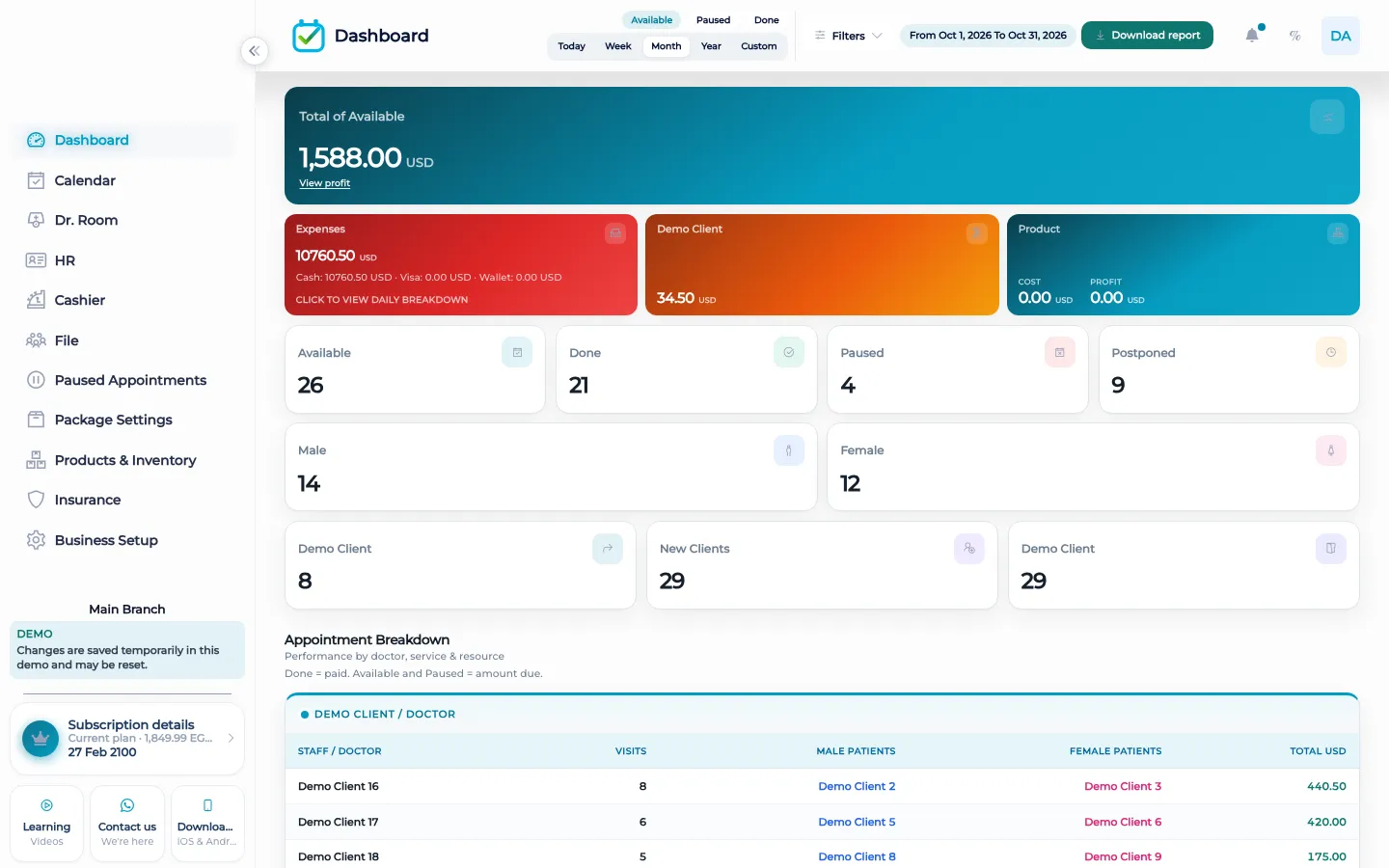
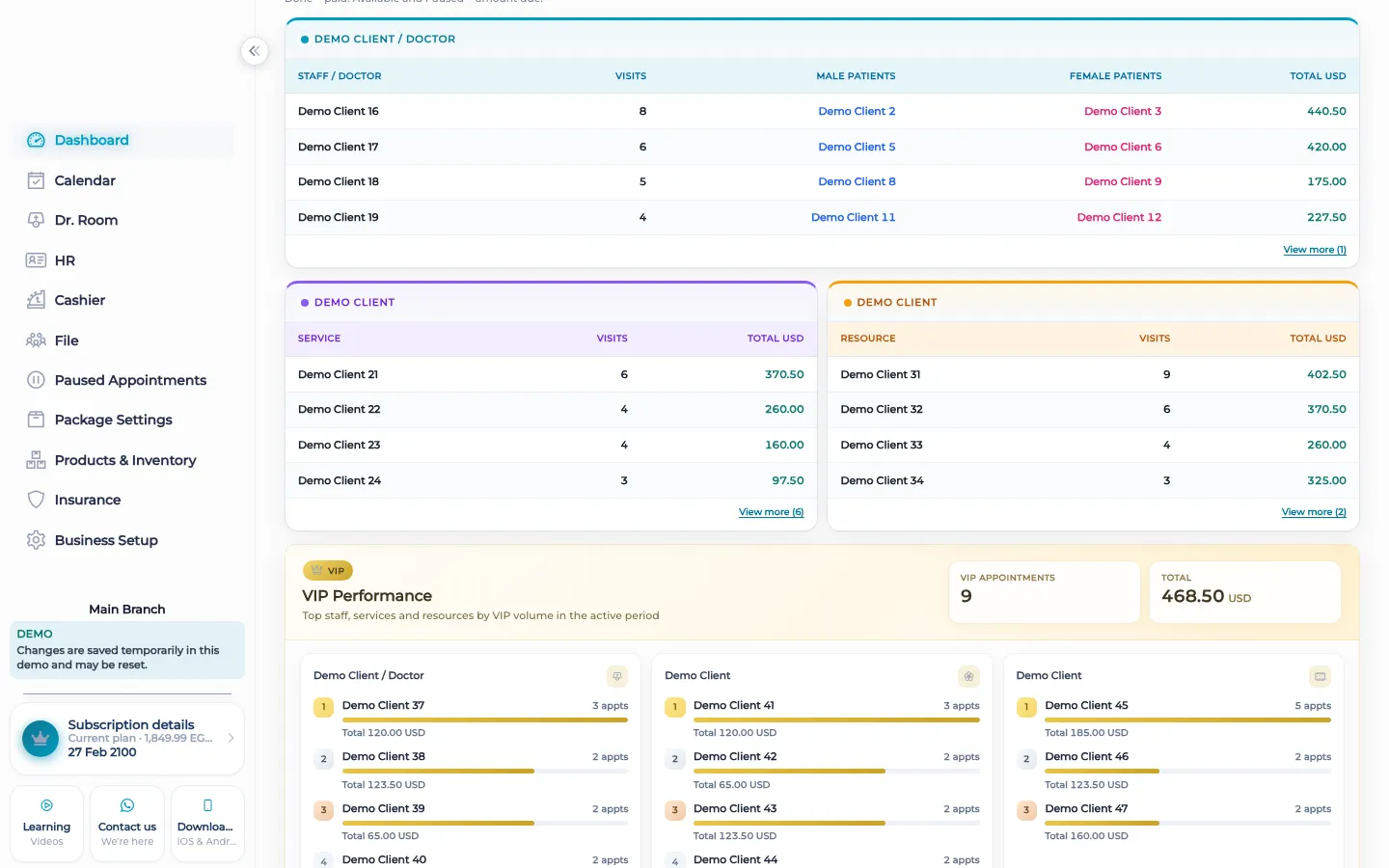
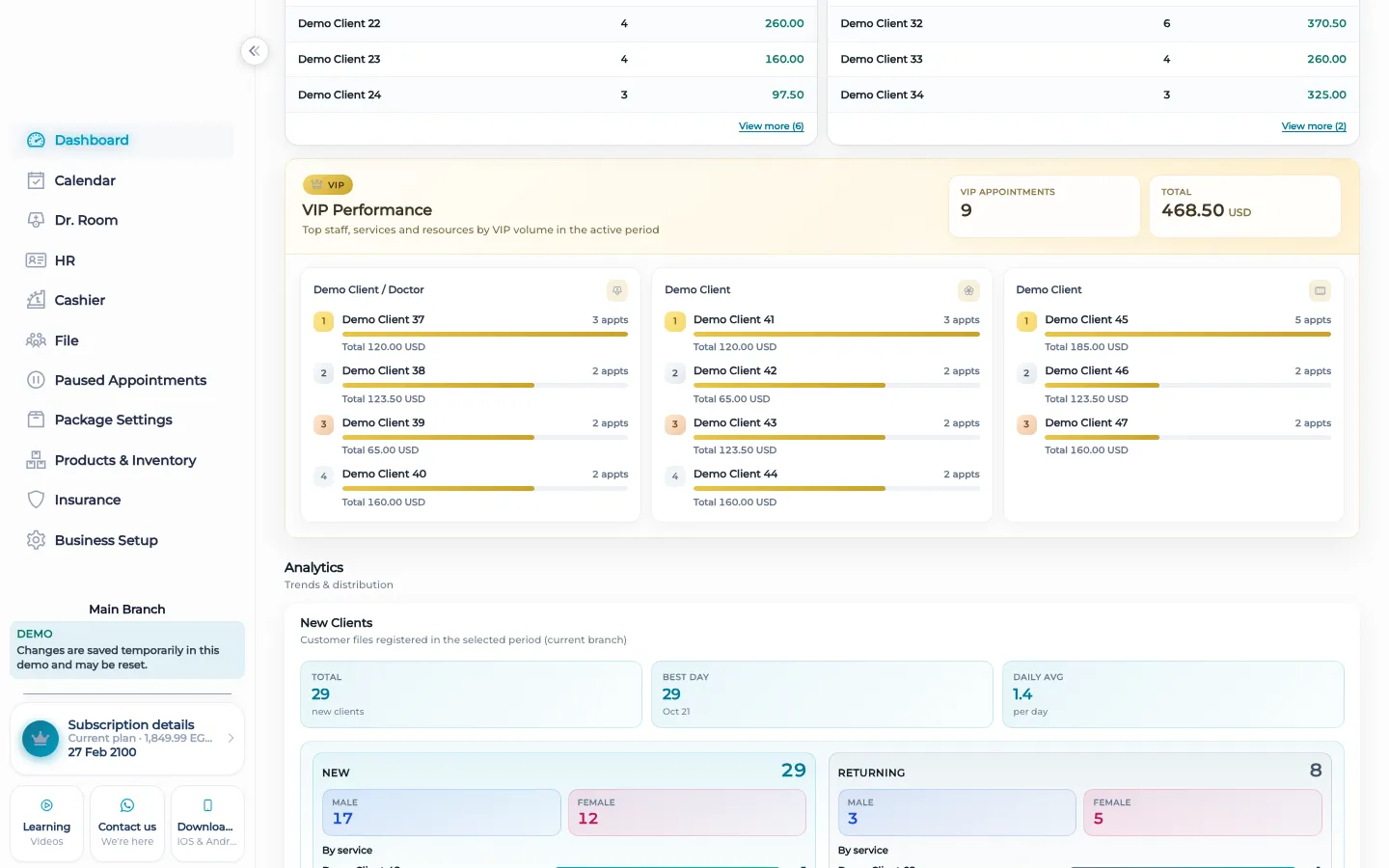
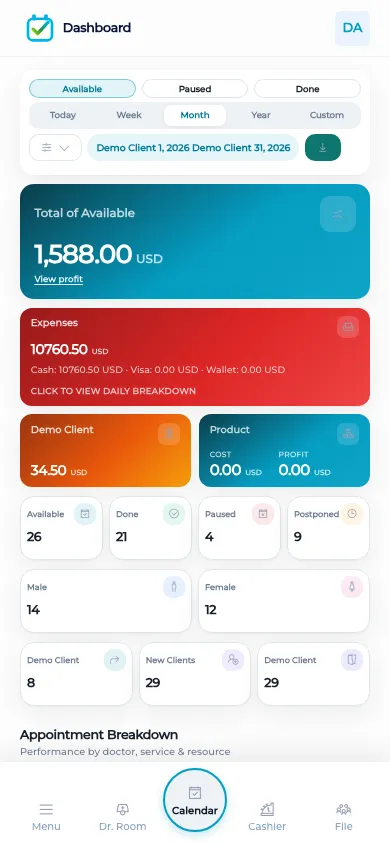
Accounting in BOC is the money that follows a visit: two currencies, a daily rate, expenses that roll from the day into the month, and profit as income against expenses.
What accounting does
A clinic or a salon often takes payment in more than one currency. BOC keeps two currencies and a daily rate so the same day is not split across two notebooks with two unofficial rates. The cashier is where the payment is taken: due, paid, and remaining, in cash, card, or wallet. Accounting is what you read after that payment exists. Daily expenses are entered as operating expenses and they roll into the monthly view. Waste from inventory stays on the inventory record. It is not turned into an operating expense by itself.
Profit in BOC is income set against expenses, by month and by year. It is not a government tax return, and it is not a file you send to a tax office from this screen. If the business is in Egypt and Egyptian tax is turned on, the e-invoice to the tax authority is a separate step on the visit. Until that connection exists, the payment stays on an internal receipt. Accounting still shows the money the desk collected and the money the desk spent.
What makes it different
A spreadsheet can add a column for a second currency. It cannot tell you that the rate is the one entered for that day, that the expense belongs to the month, or that the visit which created the income is still on the calendar. BOC keeps the payment on the visit. You do not retype the amount into a second system to know whether the month covered its costs. The dashboard and the profit view read the same records the cashier wrote.
How a manager reads the month
At the end of a working day the cashier already holds what was due, what was paid, and what is still open, including a walk-in that was not on the morning book. The operating expenses of that day sit beside that income. The next morning the monthly view has not started from zero: yesterday’s expenses are already in the month. When the month closes, profit is that income against those expenses, and the year is the same comparison over twelve months. A second currency does not require a second close. You enter the daily rate and the amounts stay labelled by currency. None of this files a tax return. None of this replaces the Egypt e-invoice when that connection is the one the visit needs. It does tell the owner whether the desk collected more than it spent, in the same workspace as the appointments.
How it works in BOC
- Take the payment. Record due, paid, and remaining at the cashier, in cash, card, or wallet.
- Set the daily rate. When two currencies are in use, enter the rate for that day so amounts stay labelled.
- Enter the day’s expenses. Add operating expenses. They roll into the month. Inventory waste stays on inventory.
- Read profit. Compare income with expenses by month and by year. This is not a tax filing.
- Use the Egypt step only when it applies. Send an e-invoice from the visit only when Egyptian tax is enabled. Otherwise the payment stays on the internal receipt.
Who it is for
Clinics A clinic reads the month as visits collected against the expenses of running the rooms.
Dental clinics A dental clinic keeps chair income and lab or supply expenses in the same month, in the currencies it actually takes.
Dermatology and laser A laser clinic can see package payments and daily expenses without a second spreadsheet for the second currency.
Beauty salons A salon closes the day from the cashier and still finds those amounts in the month.
Spas A spa separates a treatment’s income from the day’s operating expenses without retyping either.
Barbershops A barbershop with cash and a second currency keeps both on the same close.
Physiotherapy A physiotherapy practice compares a month of return visits with rent and other operating expenses.
Sports clubs A club reads court or class income against the month’s expenses, still without a member self-booking page.
Concrete benefits
- Two currencies stay on one day, with a rate you enter for that day.
- Daily operating expenses roll into the monthly figures.
- Profit is income against expenses, by month and by year.
- Inventory waste is not silently posted as an operating expense.
- Egypt e-invoicing is a separate step, only when Egyptian tax is on.
Questions
Is this a tax return?
No. Profit compares income and expenses inside BOC. It does not file a return with a tax office.
Where is the payment taken?
At the cashier, as due, paid, and remaining, in cash, card, or wallet. Accounting reads those amounts.
How do two currencies work?
BOC keeps two currencies and a daily rate. Amounts stay labelled by the currency they were taken in.
Do daily expenses disappear tomorrow?
No. Operating expenses roll into the month and into the yearly comparison.
Is inventory waste an expense?
Waste stays on the inventory record. It is not posted as an operating expense by itself.
When does an Egypt e-invoice exist?
Only when the business uses Egyptian tax and the portal is connected. Until then the payment stays on an internal receipt.