Cashier and daily income
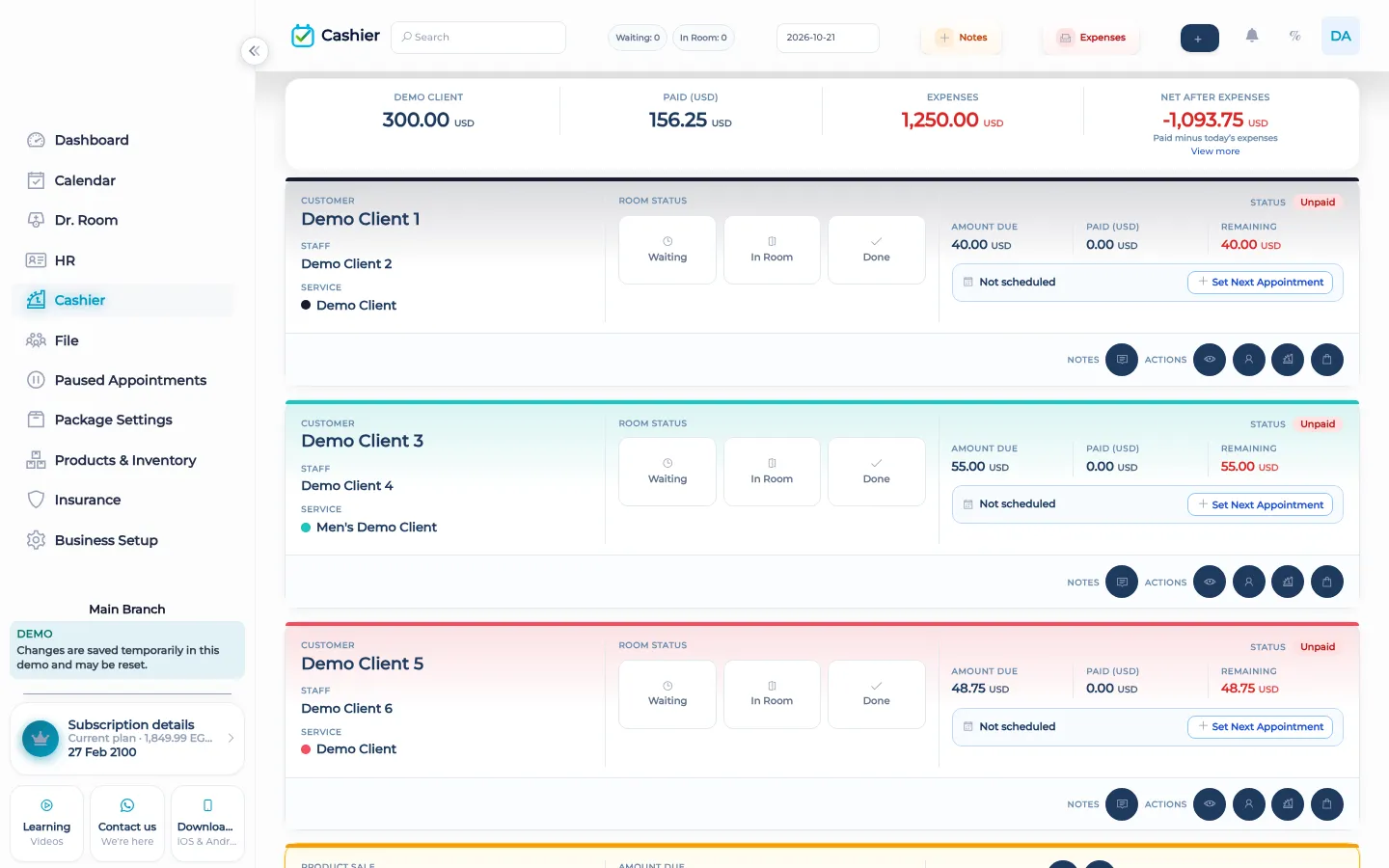
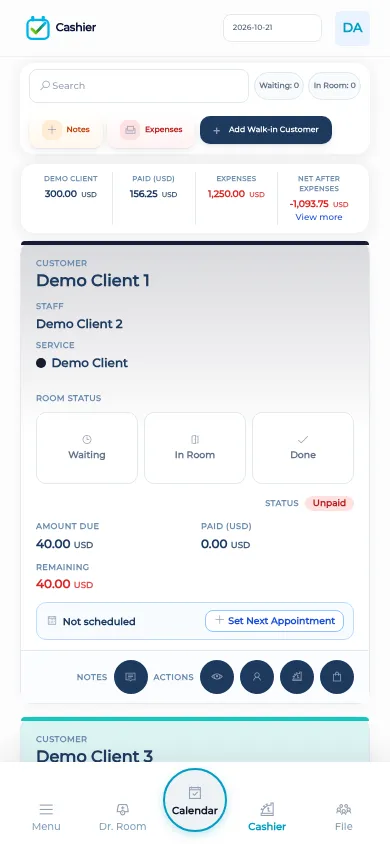
The cashier is where money is taken. A visit or a walk-in shows due, paid, and remaining. Cash, card, and wallet stay separate. The day’s income sits next to the day’s expenses.
What the cashier records
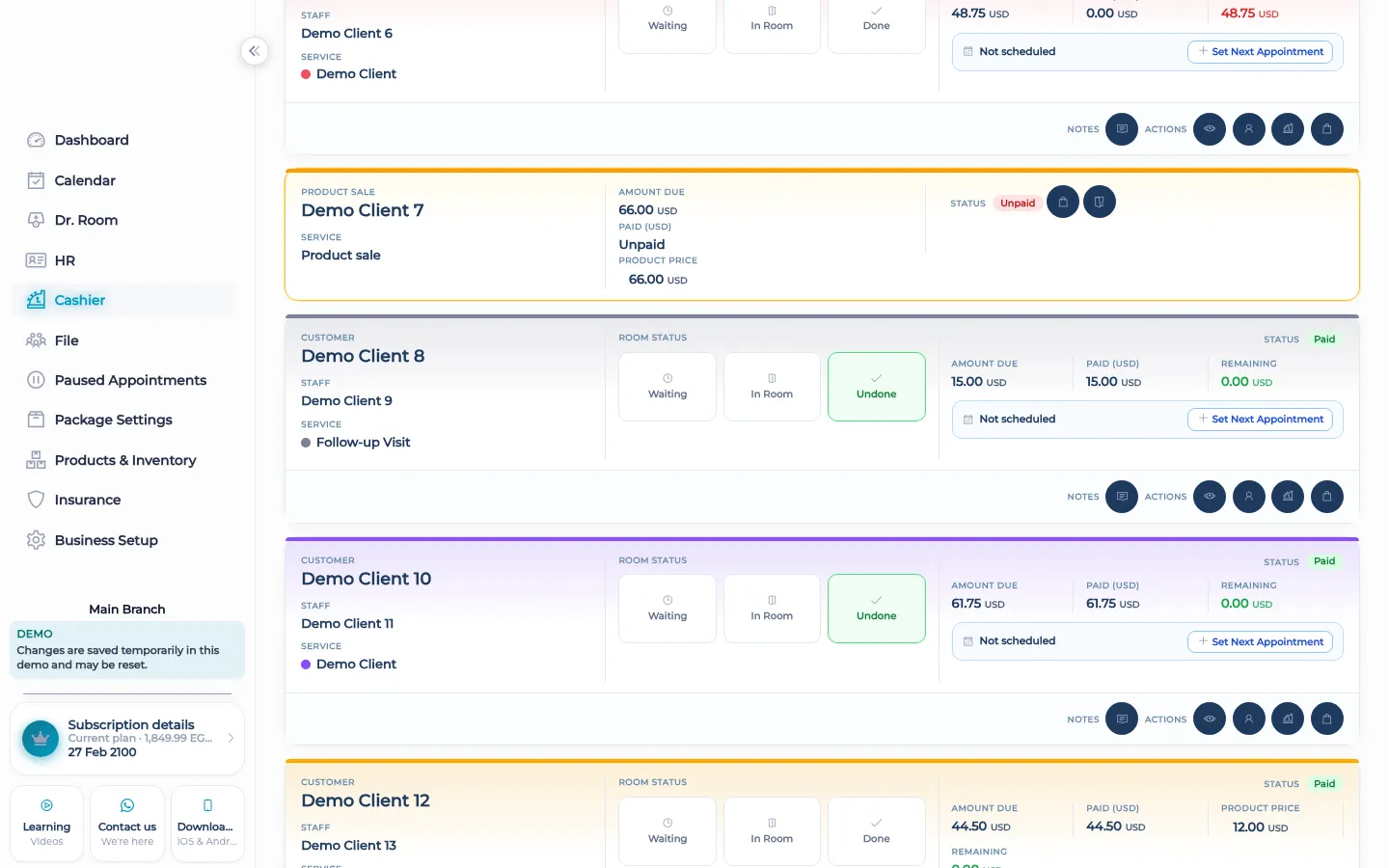
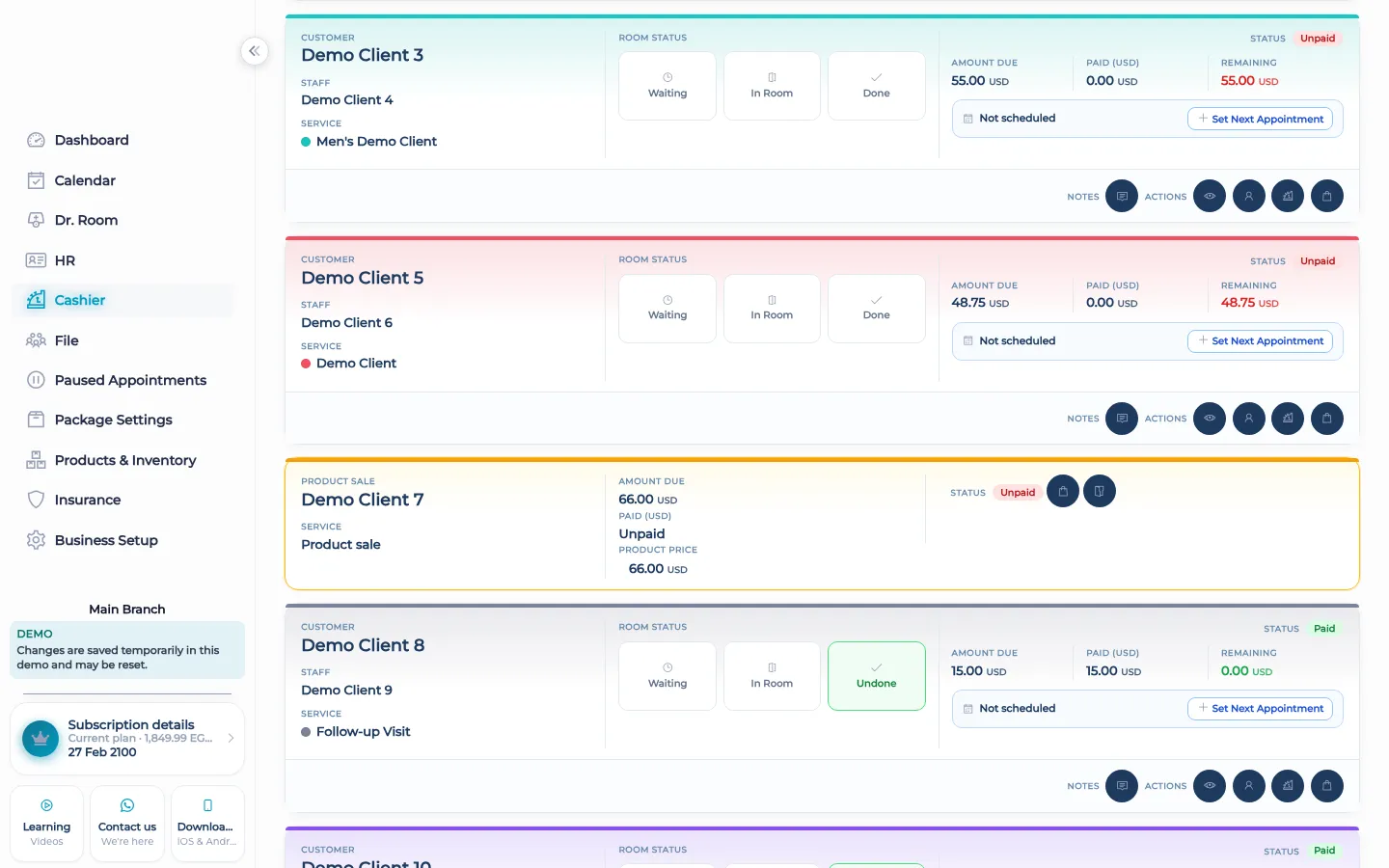
Open the cashier for the visit. You see what is due, what has been paid, and what remains. You take cash, card, or wallet, and those methods are not collapsed into one unlabeled total. A walk-in who was not on the morning book can still be taken here. A product sale on this screen reduces the branch stock. A discount that is still pending is not the price. After it is approved, the reduced price is the one this screen uses. Two currencies keep their labels, with the daily rate entered for the day. Operating expenses of the day sit beside this income and roll into the month. Inventory waste does not sneak in as one of those expenses.
The doctor room does not take this payment. It can notify the cashier, and a prepaid visit can be marked done-next so the room knows the money is already in. Insurance collections are the company side, not this drawer. An Egypt e-invoice, when Egyptian tax is on and the portal is connected, is sent from the visit. Until then the payment stays on an internal receipt, and that receipt does not claim a tax submission. The English cashier tutorial walks through the screen.
What makes it different
A card machine and a notebook can both be right and still disagree by evening. The cashier is the visit’s money. Due, paid, and remaining are the same numbers the dashboard reads, split by method and by currency. You do not add them up again in a second file to know the day.
Closing the drawer
At the end of the day the visits that were paid are not a story. Each one has due, paid, and remaining. Walk-ins are in the same list, not on a slip beside the terminal. Card is not counted as cash. A second currency is not converted in someone’s head. Expenses you entered today are already on the way into the month, separate from waste and from internal use of stock. If a discount was refused, the original price is what was due. If a package was only partly paid, the remainder is still remaining. The dashboard tomorrow can filter this day and agree with the drawer. That agreement is the point of taking the money inside the visit instead of beside it.
How it works in BOC
- Open the visit. Or take a walk-in who was not on the book.
- Read due, paid, and remaining. Those three numbers are the visit’s money.
- Choose the method. Cash, card, or wallet stay separate. A second currency keeps its label.
- Respect the price you already decided. A pending discount is not the price. An approved one is. A package remainder stays remaining.
- Leave the day readable. Income and operating expenses are what the dashboard reads tomorrow.
Who it is for
Clinics A clinic takes the patient’s part at the cashier and leaves the insurer bill on the insurance screen.
Dental clinics A dental clinic charges the visit after the chart, with due, paid, and remaining.
Dermatology and laser A laser clinic takes a package payment and a product sale in the same cashier, and stock falls.
Beauty salons A salon closes each stylist’s paid visits without mixing card into the cash drawer.
Spas A spa takes a partial package payment and still shows what remains.
Barbershops A barbershop takes a walk-in at the cashier without inventing a morning appointment.
Physiotherapy A physiotherapy practice sees the plan balance and the visit payment as the same client.
Sports clubs A club takes session money at the cashier. Members are not given a pay page.
Concrete benefits
- Due, paid, and remaining on the visit or the walk-in.
- Cash, card, and wallet stay separate, as do two currencies.
- A product sale here reduces branch stock.
- Pending discounts do not change the price.
- The day’s income is what the dashboard can read.
Watch the tutorial
Take payment on the visit, follow who is waiting and who is in the room, and record expenses from the cashier.
Questions
What are the three numbers?
Due, paid, and remaining, on the visit or the walk-in.
Which methods can I take?
Cash, card, or wallet. They stay separate. A second currency keeps its own label.
Can I take someone who has no appointment?
Yes. A walk-in can be taken at the cashier.
Does a product sale change stock?
Yes. Selling a product at the cashier reduces the quantity on that branch.
Is the receipt an Egypt e-invoice?
Only after Egyptian tax is on and the portal is connected. Until then it is an internal receipt and does not claim a tax submission.
Does the doctor room take the money?
No. The room can notify the cashier. Payment stays here.