Dental chart
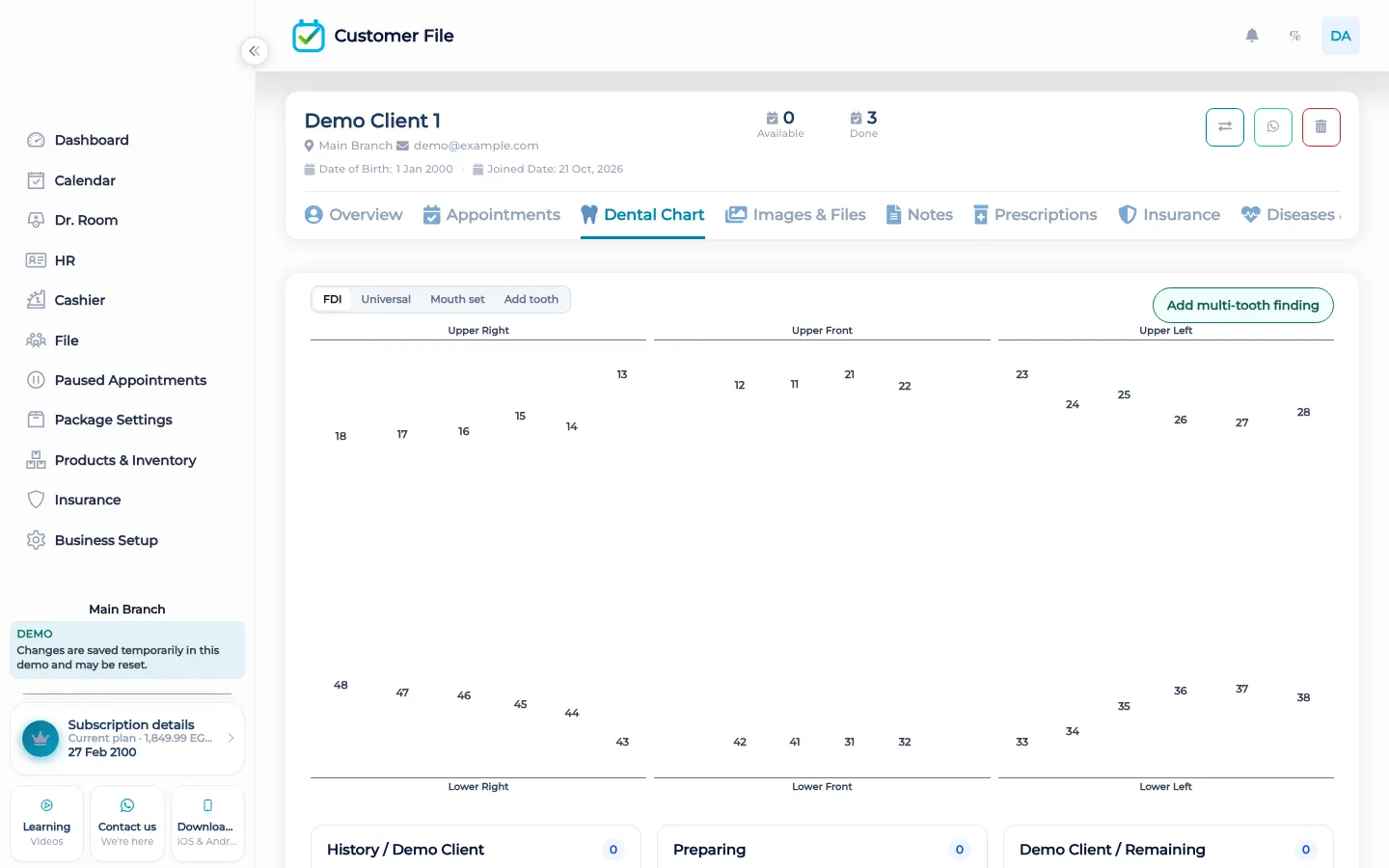
The dental chart is an FDI chart on the client file. It records findings on a tooth, including primary and permanent numbers, and a periodontal chart. A salon that is not a dental clinic leaves it off.
What the chart does
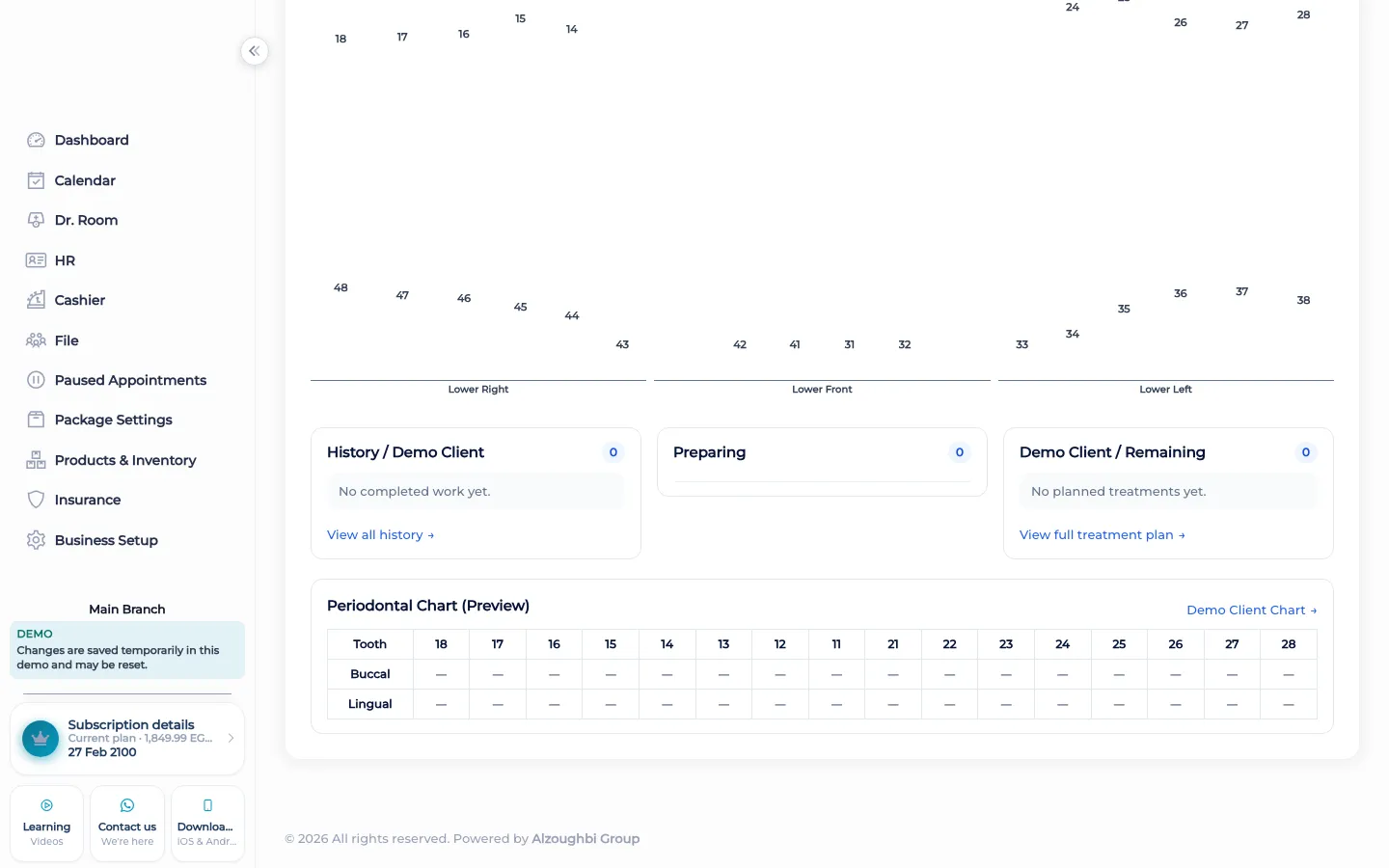
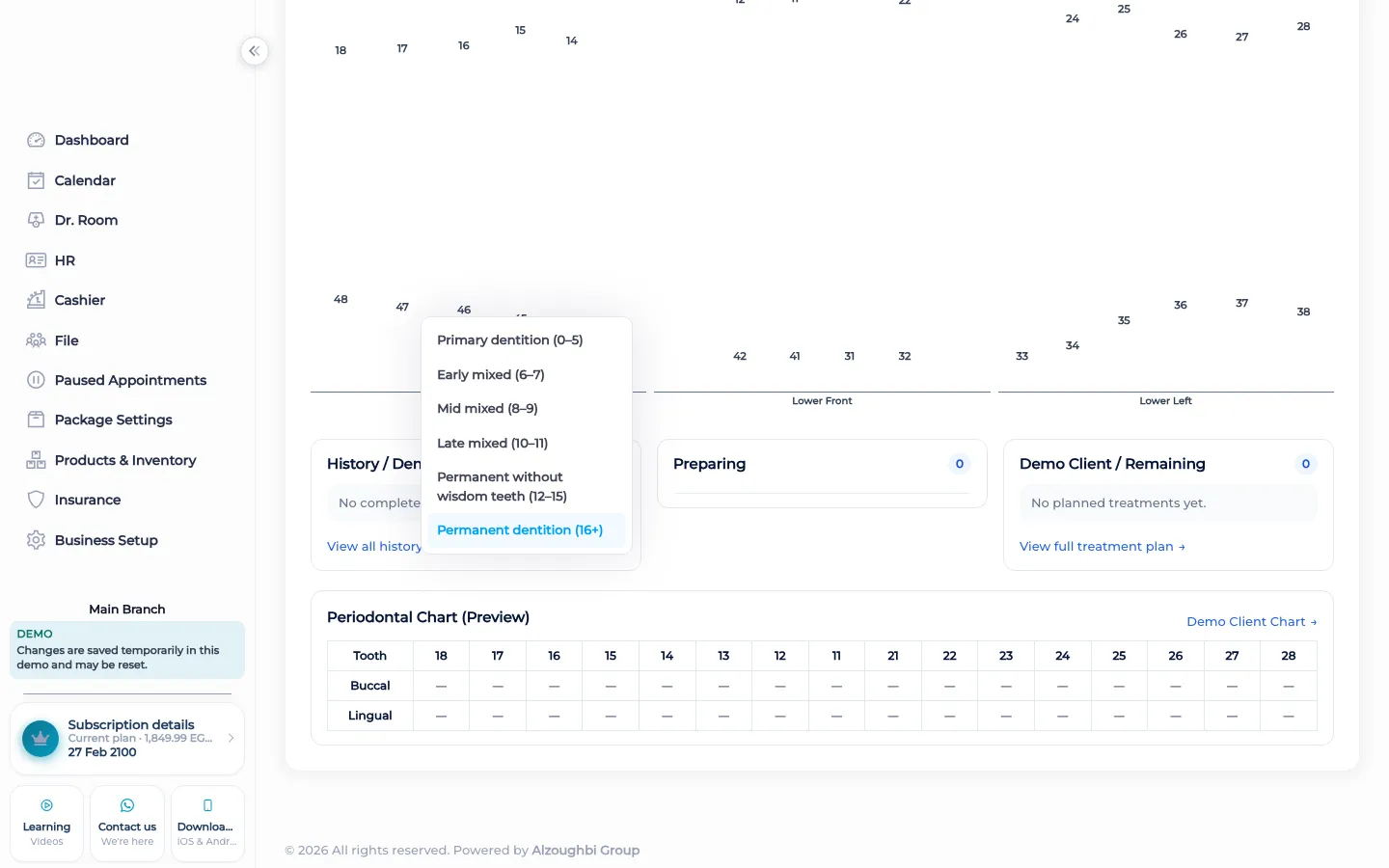
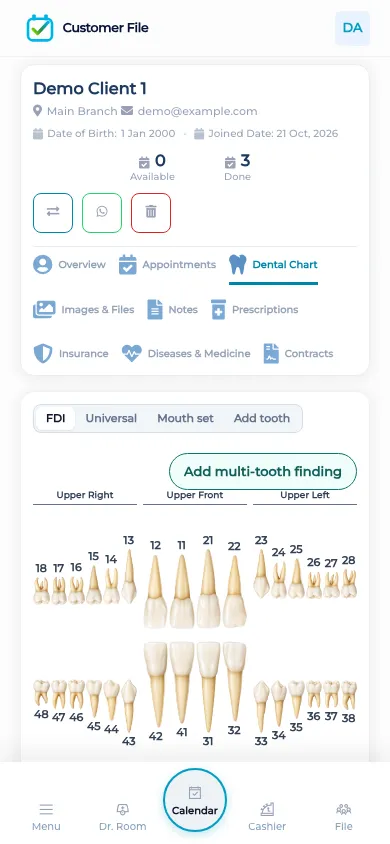
Teeth are numbered with FDI codes. Primary teeth and permanent teeth are both known numbers, and a primary tooth can be related to its permanent counterpart. Staff open the chart from the client file, on the web workspace and in the mobile app, so the chair and the phone are not two drawings. A finding can sit on one tooth. Linked findings can cover a run of teeth when the condition is not a single surface. The periodontal chart stores readings against those FDI numbers, and a molar is treated as a molar rather than as a front tooth.
The chart is part of the client file, not a separate product you buy for a barbershop. Appointments and the doctor room still use the same person. A procedure booked on a visit can be a dental procedure with a price. The chart does not book the visit by itself, and it does not take the payment. The cashier still records due, paid, and remaining. If the business is a salon, a spa, or a club, the chart stays off. Turning it on is for a clinic that actually charts teeth.
What makes it different
A paper odontogram stays in one room. The BOC chart is the file the next practitioner opens, including on the phone. Findings stay on the FDI tooth they were written against. You do not retype the chart into the visit notes to know which tooth was treated. The visit, the file, and the chart are the same client.
At the chair
The visit is already booked by staff. There is no page for the patient to pick the chair. When the patient sits, the practitioner opens the file and the chart. A permanent tooth and a primary tooth are not the same number. A finding on one tooth stays on that tooth. If the condition runs across neighbours, the linked finding covers that run instead of five unrelated marks. Periodontal readings are entered on the periodontal chart, not squeezed into a free-text note that the next person cannot filter. The same chart is on the phone if the practitioner is not at the desk computer. When the visit is done, the cashier still takes payment on the visit. The chart did not become an invoice. A beauty salon on the same BOC workspace simply does not turn this screen on.
How it works in BOC
- Open the file. The chart is on the client file, on the web and in the mobile app.
- Use the FDI number. Pick the tooth by its FDI code, primary or permanent.
- Record the finding. A finding stays on that tooth. A linked finding can cover a contiguous run.
- Enter periodontal readings. Use the periodontal chart for those readings, including the difference for molars.
- Leave it off elsewhere. A business that does not chart teeth does not turn the screen on.
Who it is for
Clinics A medical clinic leaves the chart off unless the visit is actually dental work.
Dental clinics A dental clinic charts the tooth on the file before the visit is paid at the cashier.
Dermatology and laser A dermatology clinic does not need the chart for a skin visit.
Beauty salons A salon leaves the dental chart off and keeps notes on the client file.
Spas A spa does not chart teeth. The client file is still there for the treatment.
Barbershops A barbershop does not turn on an FDI chart.
Physiotherapy A physiotherapy practice leaves the chart off and uses visits and plans.
Sports clubs A club does not chart teeth. Sessions stay on the calendar and the file.
Concrete benefits
- FDI numbers for primary and permanent teeth, on the client file.
- Findings on a tooth, and linked findings across a run of teeth.
- A periodontal chart stored against those numbers.
- The same chart on the web and in the mobile app.
- Businesses that do not chart teeth leave the screen off.
Questions
Which numbering does the chart use?
FDI. Primary teeth and permanent teeth are both recognised, and a primary tooth can map to its permanent counterpart.
Where do I open it?
On the client file, in the web workspace and in the mobile app.
Can one finding cover several teeth?
Yes. A linked finding can cover a contiguous run. A single-tooth finding stays on that tooth.
Is there a periodontal chart?
Yes. Readings are stored on the periodontal chart against the FDI numbers. Molars are not treated as front teeth.
Does a salon have to use it?
No. Leave it off. The client file, calendar, and cashier still work.
Does the chart take payment?
No. Payment stays at the cashier on the visit. The chart records the tooth.