Inventory and sales
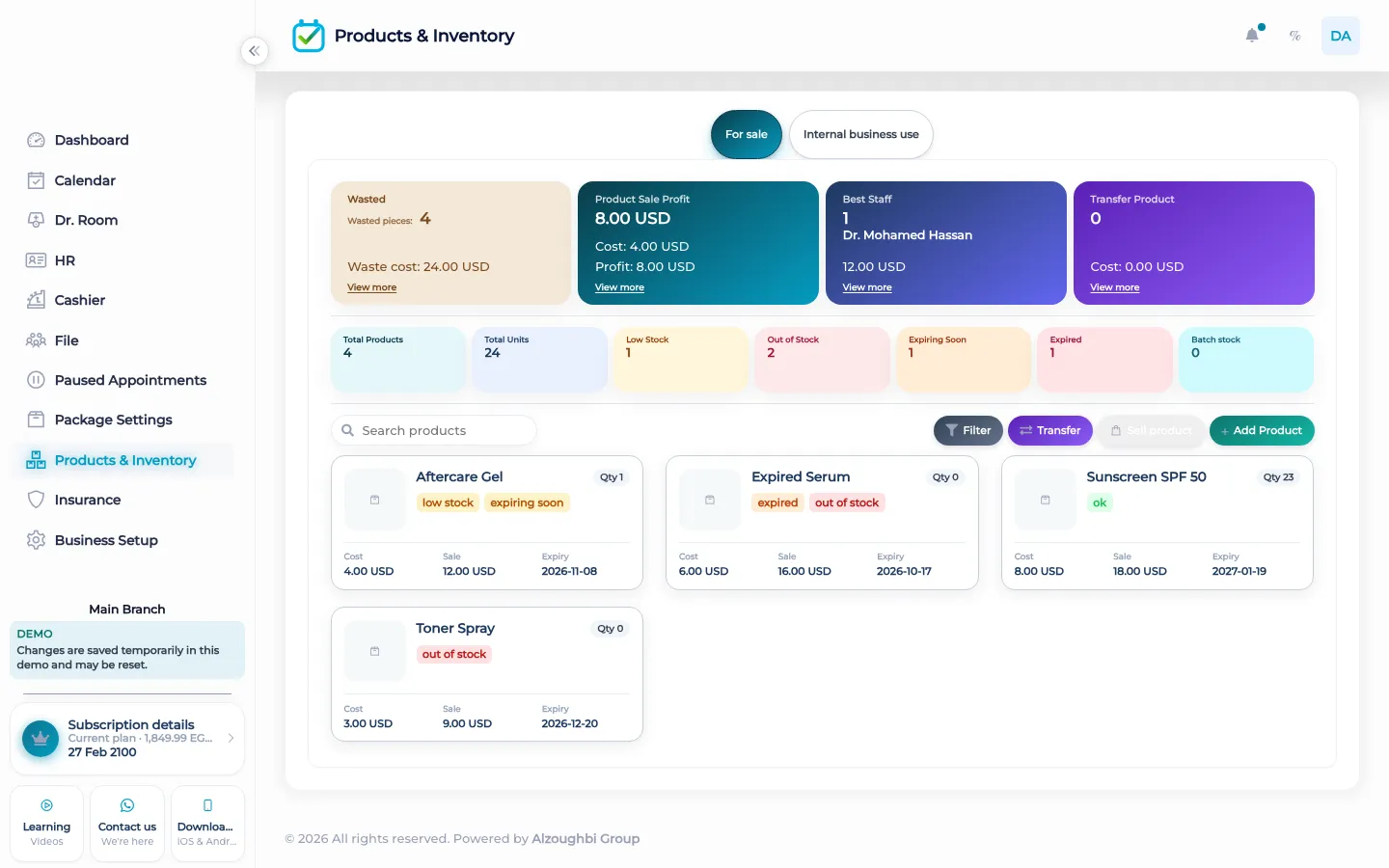
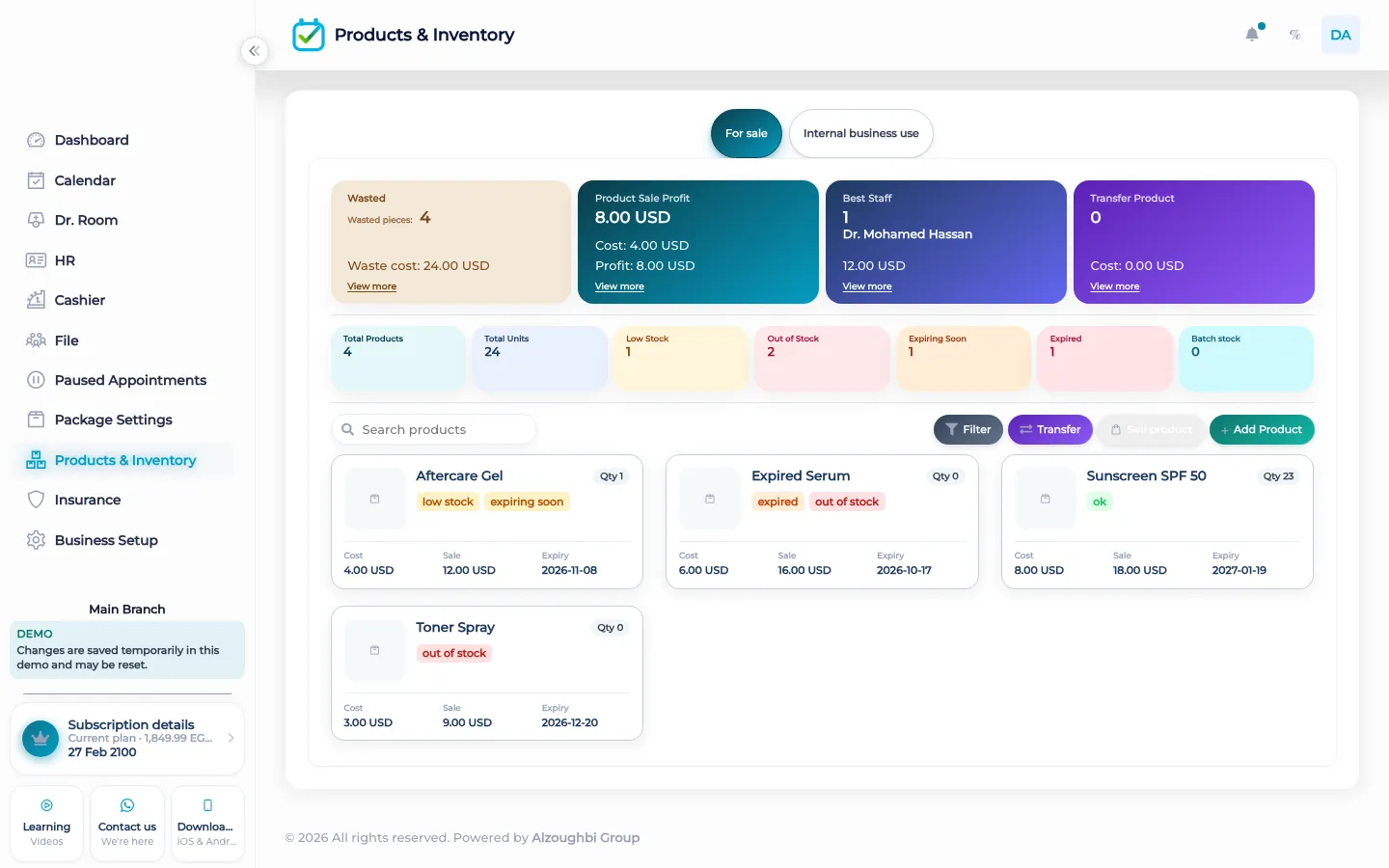
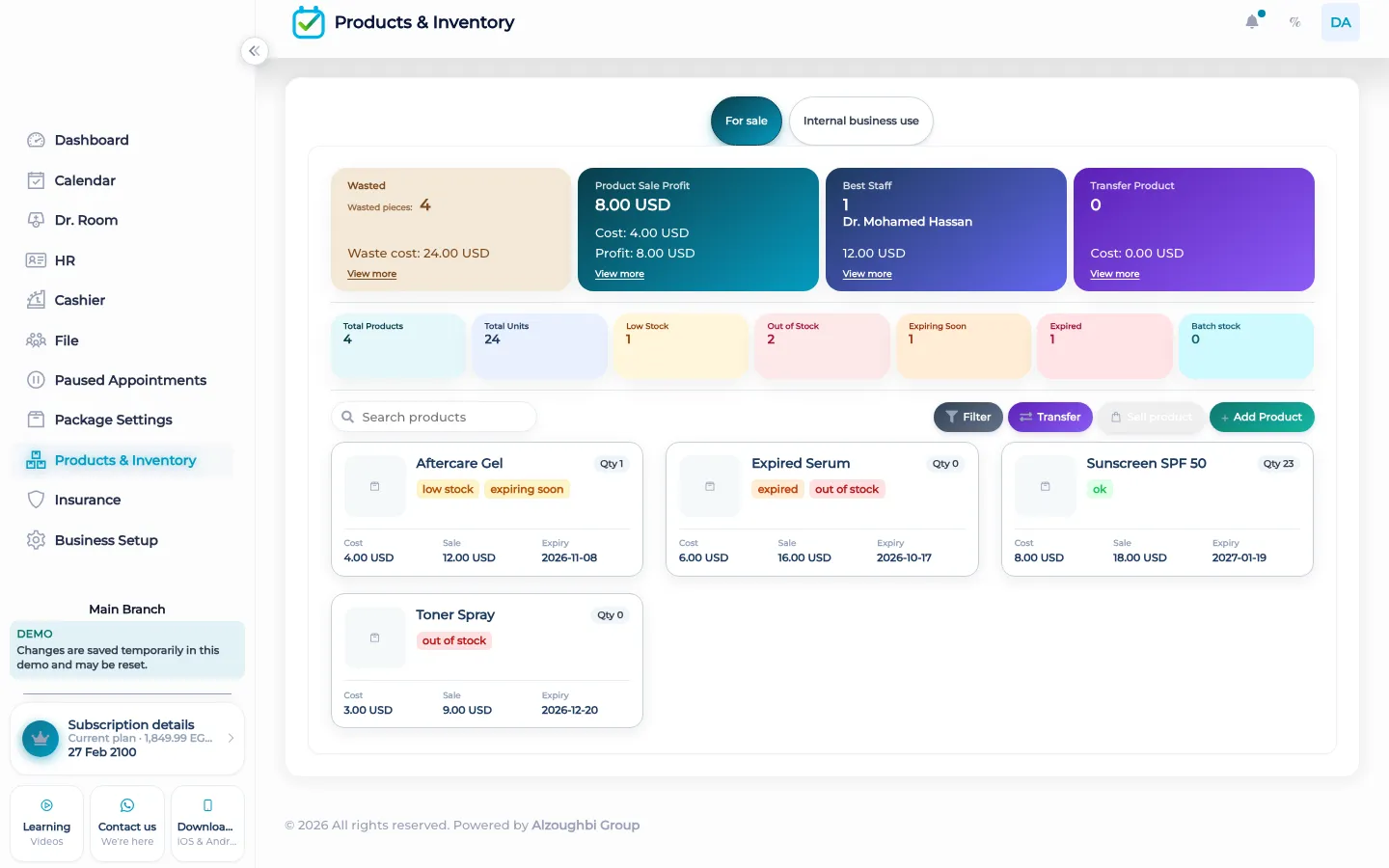
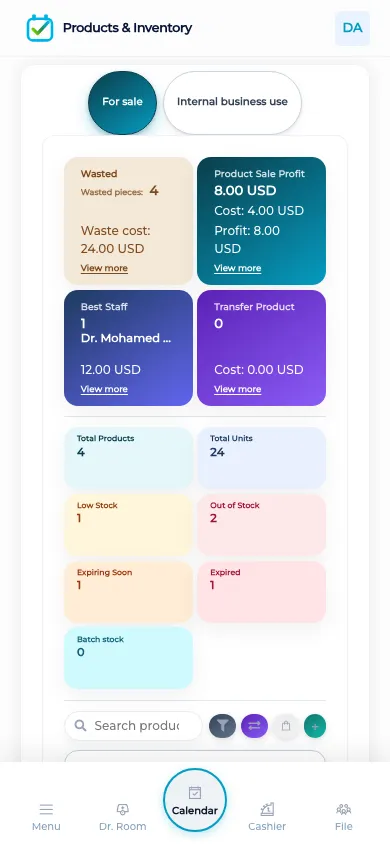
Inventory is the products on the shelf: quantity by branch, a low-stock line, an expiry date, waste, transfers, and internal use. A product sale at the cashier reduces stock.
What inventory records
A product has a name, a cost, a sale price, an expiry date, and a low-stock threshold. Quantity sits on a branch, so the second location does not pretend it has the first location’s bottles. When a batch is received, its expiry is on that batch. The product list can show what is expiring soon and what is already expired. Waste takes a quantity off the shelf and keeps it as waste, including a note. Waste is not posted as an operating expense by itself. An internal use also takes quantity off the shelf for work inside the business. That use is not a sale and it is not an operating expense either.
A transfer moves quantity from one branch to another. It does not create stock out of nothing, and doing it twice with the same request does not double the move. Selling a product at the cashier is a different step: the sale is money on the visit or the walk-in, and the quantity on that branch goes down. A discount on a product line can be requested and stays pending until it is accepted. The inventory screen is behind the inventory switch. A practice that does not sell products leaves it off and still uses the cashier for services.
What makes it different
A shelf list in a notebook does not know that the cashier just sold the last box, or that the waste should not be typed again as rent. BOC keeps the quantity, the sale, and the waste as different records. The month’s operating expenses stay the expenses you entered as expenses. The shelf stays the shelf.
A product through the day
In the morning the list shows what is low and what is near expiry at this branch. If the other branch has stock, a transfer moves a quantity across. It does not move by itself when a client changes branch. During the day a stylist or a nurse records an internal use when a product is used on a client and not sold. That quantity leaves the shelf and does not become a line in operating expenses. If a bottle is dropped, waste records it, again without turning it into rent or supplies in the expense list. When the cashier sells a product, the money is on the cashier and the quantity falls. If someone asks for a lower price on that line, the request waits. The reduced price is not assumed while it is pending. At the end of the day the shelf count is what the movements say, not what someone remembers from the cupboard.
How it works in BOC
- Add the product. Set the cost, the sale price, the expiry, and the low-stock threshold.
- Keep quantity on a branch. Stock belongs to the branch. Transfer it when you mean to move it.
- Record waste or internal use. Both reduce quantity. Neither is an operating expense by itself.
- Sell at the cashier. A product sale takes the money and reduces the branch quantity.
- Leave it off if you do not sell products. Services, visits, and the cashier still work without the inventory switch.
Who it is for
Clinics A clinic tracks consumables used in the room separately from what was sold at the desk.
Dental clinics A dental clinic sees expiry on materials and does not post waste as the month’s rent.
Dermatology and laser A laser clinic sells a product at the cashier and the shelf count falls on that branch.
Beauty salons A salon transfers colour from one branch to another instead of hoping the cupboard matches.
Spas A spa records oil used in a treatment as internal use, not as a retail sale.
Barbershops A barbershop sells a product at the chair’s cashier and the quantity drops.
Physiotherapy A physiotherapy practice can leave inventory off and still bill the visit.
Sports clubs A club that sells a bottle records the sale at the cashier, on that site’s stock.
Concrete benefits
- Quantity, low stock, and expiry are kept by branch and by batch.
- Waste and internal use reduce stock and are not operating expenses.
- A transfer moves quantity between branches without doubling the same request.
- A cashier product sale reduces the quantity on that branch.
- The inventory switch can stay off.
Questions
Does waste become an expense?
No. Waste stays on the inventory record. Operating expenses are entered on their own.
What is an internal use?
Quantity taken off the shelf for work inside the business. It is not a sale and not an operating expense.
When does stock fall for a sale?
When the product is sold at the cashier. The money is recorded there and the branch quantity drops.
Can I move stock to another branch?
Yes. A transfer moves a quantity from one branch to another. Repeating the same request does not double it.
Does a client transfer move the bottles?
No. Stock moves only when you transfer it. A client move reviews visits, not the shelf.
Can a product discount skip approval?
No. A requested discount on a product line stays pending until it is accepted.